Concrete Surface Preparation
Proper prep helps a garage floor coating bond to the concrete, look better, and last longer.
Why surface prep matters
Even a high-quality coating system depends on the concrete underneath it. If the surface is dirty, weak, too smooth, damp, or poorly bonded to an old coating, the new coating may not adhere properly. Professional surface preparation helps reduce the risk of peeling, bubbling, delamination, and early wear.
Why Preparation Matters So Much
Concrete may look solid and smooth, but the surface can contain dust, weak material, old coatings, stains, moisture issues, or a dense surface layer that makes it harder for a new coating to bond. Professional surface preparation removes weak or contaminated material and creates the right surface profile for the coating system.
Think of it like painting a wall. If the surface is dirty, glossy, or poorly prepared, even good paint may peel. Garage floor coatings work the same way: the coating performs best when the concrete underneath has been properly cleaned, repaired, and prepared.
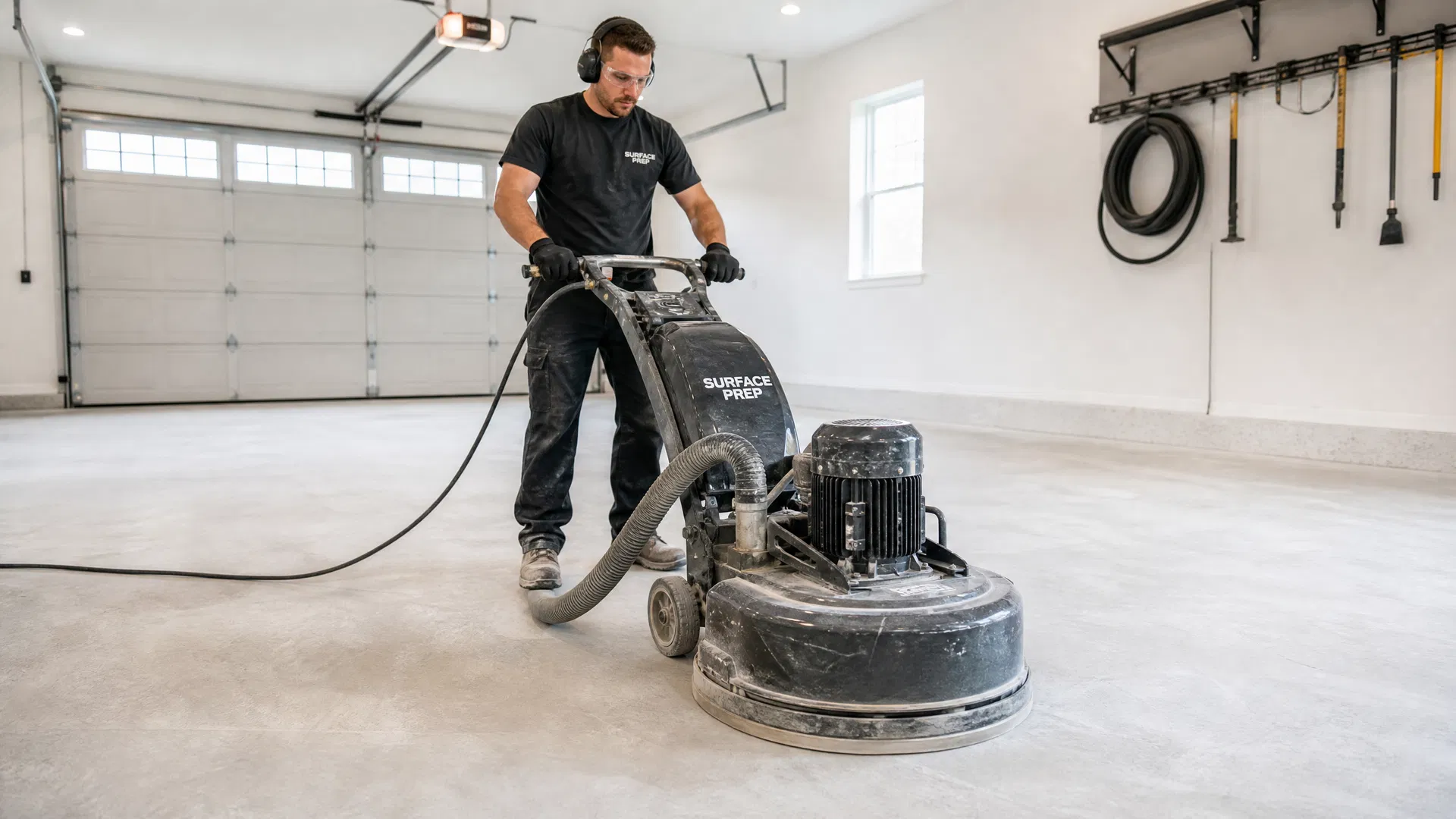
Professional installers use diamond grinding equipment to prepare the surface before coating. This equipment helps create a consistent profile across the floor, while the installer evaluates cracks, stains, old coatings, and other conditions that may affect adhesion and long-term performance.
What Professional Surface Prep May Include
Every garage floor is different, so the preparation process can vary. Before a coating is installed, a professional will evaluate the concrete and determine what the floor needs for proper adhesion and long-term performance.
- Cleaning the concrete to remove dust, dirt, and residue
- Removing old coatings, sealers, or failing material when needed
- Repairing cracks, chips, pitting, or surface damage
- Addressing oil stains, moisture concerns, or other adhesion risks
- Creating the right surface profile for the selected coating system
The exact method depends on the condition of the concrete, the coating being installed, and the installer’s recommended process.
Common Concrete Issues and How They're Handled
During an estimate, a professional will look for common concrete conditions that can affect preparation, coating choice, timing, and cost.
Oil and Grease Stains
Oil, grease, and automotive fluids can soak into concrete and interfere with coating adhesion. Depending on the severity, the installer may recommend degreasing, mechanical preparation, or additional treatment before the coating is applied.
Cracks and Spalling
Small cracks, chips, pitting, and spalled areas may need to be repaired before coating. Larger cracks, movement, or significant surface damage may require additional evaluation before a coating system is recommended.
Moisture Vapor Transmission
Moisture moving through the concrete slab can affect coating adhesion and long-term performance. If there are signs of moisture, previous coating failure, damp areas, or vapor transmission concerns, the installer may recommend additional evaluation or a coating system designed for those conditions.
Existing Coatings or Paint
Old paint, sealers, or previous coatings may need to be removed or mechanically prepared before a new coating system is installed. The right approach depends on whether the existing material is well bonded, peeling, contaminated, or incompatible with the new coating.
Efflorescence
Efflorescence is a white, chalky residue that can appear when moisture carries dissolved salts to the concrete surface. It should be addressed before coating because it may indicate moisture movement or surface contamination that can affect adhesion.
New Concrete
New concrete often needs time to cure before a coating is installed. The required cure time depends on the slab, moisture conditions, coating system, and installer recommendations, but many projects require roughly 28 days or more before coating.
Related Guides
Ready to Talk About Your Garage Floor?
Call to discuss your floor's condition, coating options, and next steps with a local floor coating professional. A brief conversation can help clarify what kind of preparation may be needed before your garage floor is coated.
(828) 675-7706